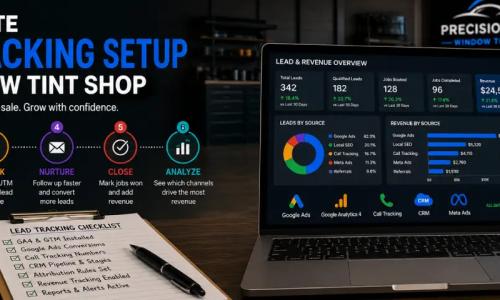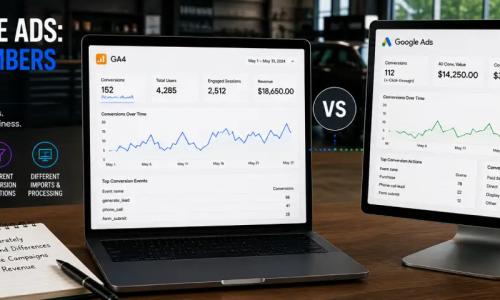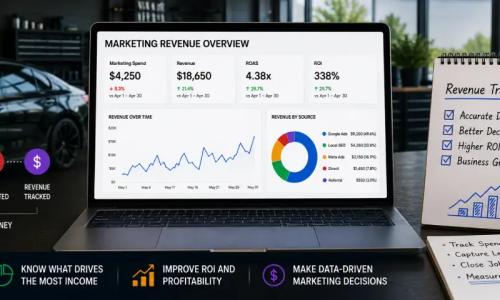
Getting leads from Google Ads is useful, but a window tint shop ultimately needs to know which ads produce booked appointments. If tracking stops at form submissions or phone calls, you can end up optimizing for cheap leads instead of customers who actually schedule tint work.
A better measurement system follows the full path from ad click to lead to qualified opportunity to booking. That gives you a clearer view of campaign quality and creates better conversion data for future Google Ads optimization.
Why Lead Tracking Alone Is Not Enough
A Google Ads campaign can generate plenty of visible activity without producing enough appointments. Two campaigns might each create 20 leads, for example, while one produces far more legitimate tint inquiries and bookings than the other.
For a window tint business, useful measurement should distinguish between stages such as:
- an ad click or website visit;
- a phone call or quote-form submission;
- a qualified lead with a real tinting need;
- a scheduled appointment; and
- a completed job or sale, when your systems can reliably record it.
This funnel makes it possible to evaluate advertising based on business outcomes rather than lead volume alone.
Build the Tracking Path From Google Ads to Your CRM
1. Install reliable website conversion tracking
Start by making sure the Google tag is implemented correctly across the website, either directly or through Google Tag Manager. Google recommends site-wide tagging for accurate website conversion measurement. Create conversion actions for meaningful online events such as completed quote forms and relevant calls rather than treating every minor interaction as a primary success.
For window tint campaigns, common website lead events include quote-request submissions, appointment requests, and calls generated from the website. Button clicks can be useful diagnostic events, but a click should not automatically be treated as a completed lead when the actual inquiry can be measured.
2. Enable auto-tagging and preserve the click identifier
Google Ads auto-tagging adds a Google Click Identifier, or GCLID, to eligible ad-click URLs. That identifier can help connect a later offline outcome back to the original ad interaction.
If your tracking setup relies on GCLID-based attribution, make sure the identifier survives redirects and landing-page navigation and is stored with the corresponding lead record. Your form, CRM, lead database, or integration should retain it instead of discarding it after the first page view.
3. Send every lead into one trackable system
The next challenge is identity. A form lead may arrive with a name, phone number, email address, GCLID, campaign information, or a combination of those fields. A call may enter through a separate call-tracking workflow. If those records live in disconnected systems, it becomes difficult to follow the customer journey to a booking.
Use a CRM or lead-management system as the central record wherever practical. Each lead should carry enough information to answer three questions: where did this lead come from, what happened to the lead, and did the lead book?
Define the Conversion Stages Before You Automate Them
Tracking works better when everyone uses the same definitions. A simple window tint funnel might use the following stages:
| Stage | Example definition | Why it matters |
|---|---|---|
| Lead | New form submission or valid inbound inquiry | Measures initial response to advertising |
| Qualified lead | Real prospect seeking a service the shop offers | Filters spam, wrong numbers, and irrelevant inquiries |
| Booking | Appointment scheduled for a specific service or time | Connects marketing to the sales calendar |
| Completed job | Customer receives service and the transaction is recorded | Enables revenue-oriented analysis when data quality is strong |
The exact labels can differ by shop. What matters is that the status change is consistent and tied to a real event rather than a salesperson's guess.
Track Forms, Calls, and Bookings Separately
Form leads
For quote forms, record the lead only after a successful submission. Store available attribution information with the lead, including the GCLID when your implementation uses it. Avoid counting repeated button presses or validation errors as separate leads.
Phone leads
Phone calls deserve their own tracking because many local-service prospects prefer to call. Google Ads supports call conversion measurement in several configurations, including calls from websites using a phone snippet with a Google forwarding number where supported.
Regardless of the call-tracking platform you use, connect qualified calls to the same lead and booking workflow used for forms. Otherwise, campaigns that generate strong phone leads can appear weaker than they really are.
Booked appointments
A booking should be recorded when an appointment is actually scheduled, not merely when a visitor opens the booking page. Ideally, the booking record retains or can be matched to the original lead so the advertising source does not disappear at the final step.
Send Qualified Leads and Bookings Back to Google Ads
Once your CRM knows which leads qualified or booked, you can use offline conversion measurement to return those downstream outcomes to Google Ads. Google currently recommends enhanced conversions for leads for advertisers starting offline lead measurement.
Enhanced conversions for leads can use hashed first-party customer data, such as an email address or phone number, to supplement offline conversion data. Google also recommends continuing to provide GCLIDs whenever possible because they can improve attribution to specific ad clicks.
For lead-generation advertisers, Google specifically recommends qualified-lead or converted-lead goals when creating offline conversion actions. For a window tint shop, a qualified inquiry and a confirmed booking can therefore be represented as distinct milestones if your CRM can record them consistently.
A practical data flow
- A prospect clicks a Google Ad and reaches the tint landing page.
- The website captures available ad-attribution information and the prospect submits a quote request or calls.
- The lead enters the CRM with its source data.
- Staff qualify the inquiry and update the lead status.
- The prospect schedules a tint appointment.
- The CRM or connected data workflow records the booking conversion.
- The eligible offline conversion data is sent back to Google Ads through a supported import method.
Google Ads Data Manager is one supported route for importing enhanced conversions for leads. Google has also changed its implementation architecture in 2026, including a unified enhanced-conversions setting and migration of relevant upload workflows toward the Data Manager API, so current Google documentation should be checked when building or maintaining an API-based integration.
Choose Primary and Secondary Conversions Carefully
Not every tracked action needs to influence bidding. A window tint account may measure several useful events while reserving primary conversion status for the outcomes that best represent real business value.
For example, a shop might observe form leads, calls, qualified leads, and bookings but optimize primarily toward qualified leads or bookings once enough reliable downstream data is available. This helps prevent a low-value micro-conversion from carrying the same strategic importance as a genuine appointment.
Before changing bidding inputs, verify that the downstream data is arriving consistently. Google recommends validating enhanced-conversion data and allowing data to accumulate when moving from an existing offline-import setup rather than immediately switching off the old measurement path.
Use a Simple Window Tint Tracking Scorecard
Once the pipeline is connected, review performance by campaign, ad group, service, and location where the data volume is meaningful. Useful metrics include:
- lead volume;
- cost per lead;
- qualified leads;
- lead-to-qualified rate;
- booked appointments;
- lead-to-booking rate;
- cost per booking; and
- completed-job value or revenue when reliably available.
This scorecard changes the conversation from “Which campaign generated the cheapest leads?” to “Which campaign generated the most useful business outcomes at an acceptable cost?”
Common Tracking Mistakes to Avoid
Counting clicks as leads. A click on a phone number or booking button may indicate intent, but it is not always proof that a call connected or an appointment was made.
Losing attribution after the form submission. If campaign or click information never reaches the CRM, downstream booking attribution becomes much harder.
Using inconsistent CRM statuses. If one employee marks a prospect “qualified” after a conversation while another uses the status for any new inquiry, your imported conversion data becomes unreliable.
Ignoring phone inquiries. Measuring forms while leaving calls disconnected creates an incomplete picture for a local service business.
Uploading bookings without deduplication controls. Your integration should prevent the same business event from being counted repeatedly. Google supports identifiers such as order or transaction IDs in relevant offline-conversion workflows to help manage duplicates.
Optimizing before validating the data. Test the journey from an ad-tagged visit through lead capture, CRM status changes, booking, and offline import before trusting the numbers for bidding decisions.
What a Good Tracking Setup Should Tell You
A useful Google Ads tracking system for a window tint business should let you trace meaningful outcomes far enough down the funnel to make better decisions. You should be able to see not just which campaigns generated inquiries, but which ones produced qualified prospects and booked work.
Start with dependable website and call measurement, preserve attribution data, connect leads to your CRM, define consistent funnel stages, and then return qualified or converted outcomes to Google Ads through the appropriate current measurement workflow.
Once those pieces are connected, cost per lead becomes only one part of the story. Cost per qualified lead and cost per booking can give a window tint shop a much stronger basis for deciding where its advertising budget is actually working.
Ready to grow your business?
Book a free strategy call and see what's possible.